The Missing Connection Between Creator Campaigns and Sales
Influencer marketing has become a key growth channel for e-commerce brands. Campaigns generate awareness, engagement, creator content, and customer interest, but many teams still face the same challenge: connecting campaign activity with actual sales results.
Creator management, campaign execution, and e-commerce operations often live in separate systems. Marketing teams manage creators in one platform, sales data sits in the e-commerce store, and reporting happens somewhere else entirely.
As a result, answering simple business questions can become surprisingly difficult:
– Which creators generated the most revenue?
– Which campaigns drove the most sales?
– Which offers performed best?
– How much revenue can be attributed to creator activity?
The challenge is often not a lack of data. The challenge is connecting it.

Why E-commerce Integration Matters
Most brands already collect valuable sales data within their e-commerce platforms. The problem is that campaign data and e-commerce data are frequently disconnected.
Without integration, marketing teams often rely on manual reporting, spreadsheets, or data exports to understand campaign performance. This process is time-consuming, difficult to scale, and prone to errors.
By connecting e-commerce data directly with influencer campaigns, brands can gain a clearer view of performance and spend less time collecting information from multiple sources.
Instead of managing separate datasets, teams can analyze creator activity and sales performance in one place.
Option 1: Native Shopify Integration
For brands using Shopify, connecting e-commerce performance with influencer campaigns is now easier than ever.
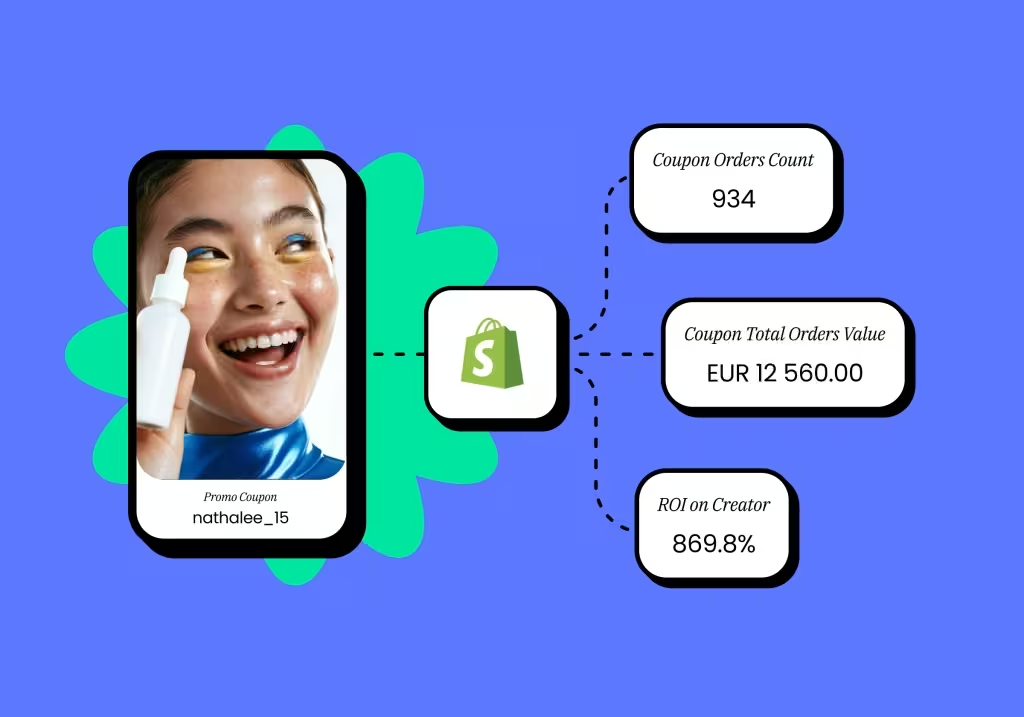
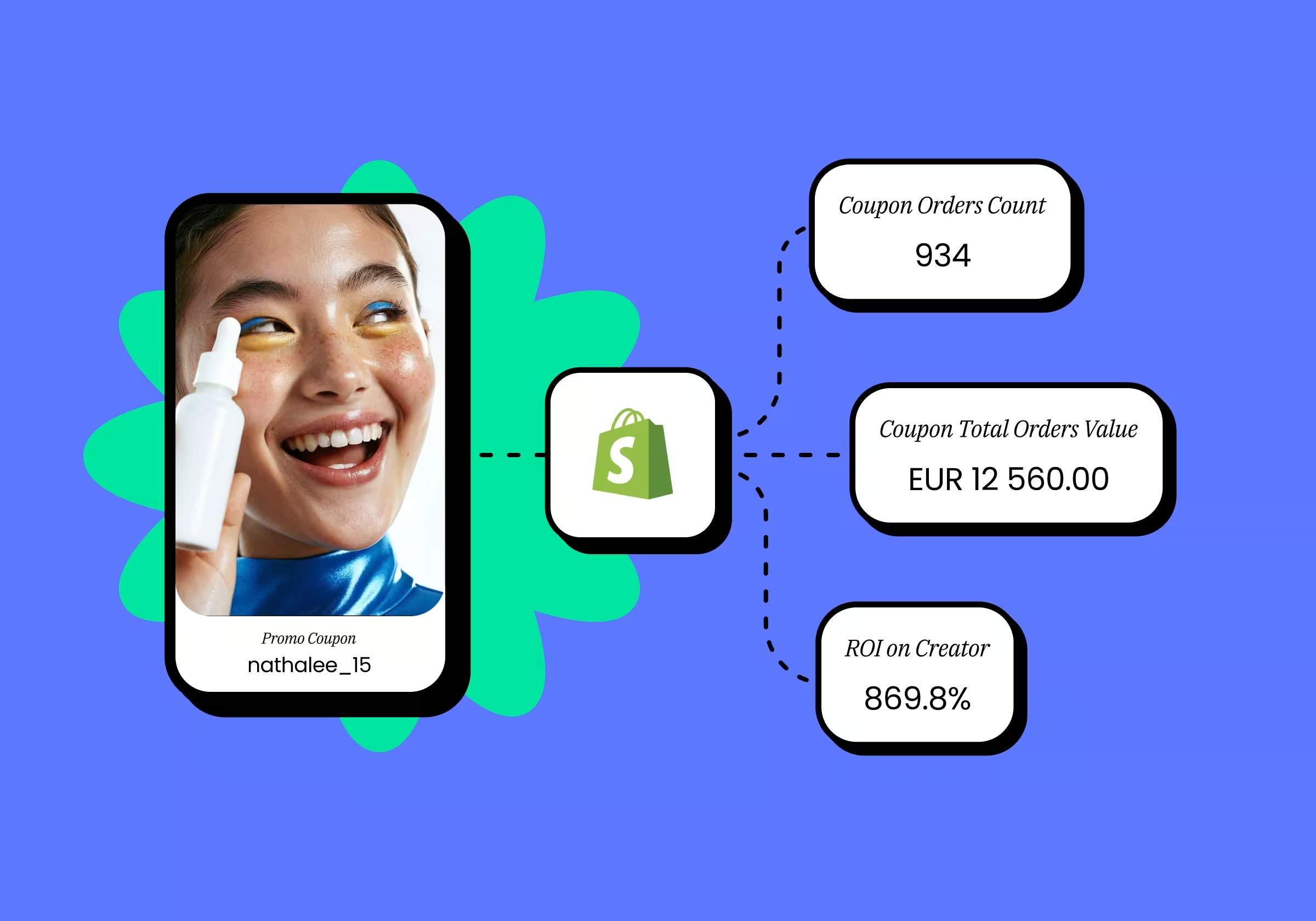
The new Shopify integration allows brands to automatically synchronize coupon redemptions, order information, and revenue data with indaHash.
Once connected, campaign teams can monitor how creator-specific promotions perform without relying on manual exports or external reporting tools.
This creates a more streamlined workflow and provides faster access to performance insights.
Whether you’re running campaigns with a handful of creators or managing large-scale programs, automatic synchronization helps reduce operational work while improving visibility into campaign results.
Option 2: Flexible E-commerce Integrations
Not every brand uses Shopify.
Many organizations operate custom e-commerce environments or work with platforms that require a different integration approach.
To support these scenarios, indaHash provides flexible integration options that allow sales and coupon data to be connected with campaign reporting.
This enables brands to bring e-commerce performance into their influencer marketing workflow regardless of the underlying e-commerce technology.
The goal remains the same: connect creator activity with measurable business outcomes.
Option 3: Spreadsheet-Based Imports
Not every organization is ready for a direct e-commerce integration.
Some teams prefer to start with manual data imports while maintaining their existing processes.
For these situations, indaHash also supports structured sales data imports.
This allows brands to upload sales information and combine it with campaign performance data inside the platform.
While automation is often the preferred approach, spreadsheet-based imports provide a practical alternative for teams that want greater flexibility or are still evaluating integration options.
One Campaign. Multiple Data Sources.
Modern influencer marketing campaigns generate data from multiple sources.
Campaign performance data, creator activity, coupon redemptions, orders, and revenue all contribute to the bigger picture.
Bringing these data sources together helps teams eliminate manual reporting and gain a more complete view of campaign performance.
With indaHash, brands can combine:
Campaign performance data
Creator activity
Coupon redemptions
E-commerce orders
Revenue data

Whether the data comes from Shopify, another e-commerce platform, or spreadsheet imports, teams can centralize campaign and sales information in one reporting environment.
The result is a simpler workflow, fewer manual processes, and better visibility into how creator campaigns contribute to business outcomes.
Key Takeaway
Connecting influencer campaigns with e-commerce data should not require complex workflows, disconnected reports, or hours spent working in spreadsheets.
Whether you’re using Shopify, another e-commerce platform, or simple sales data imports, indaHash provides multiple ways to bring e-commerce performance into campaign reporting. By connecting creator activity with sales and revenue data, brands gain a clearer understanding of campaign impact, improve attribution accuracy, and make more informed marketing decisions.
The result is a simpler workflow, better visibility into performance, and a stronger understanding of which creator partnerships contribute to business growth.