The Blind Spot Before Every Campaign
Five Questions to Ask Your Market Before You Brief
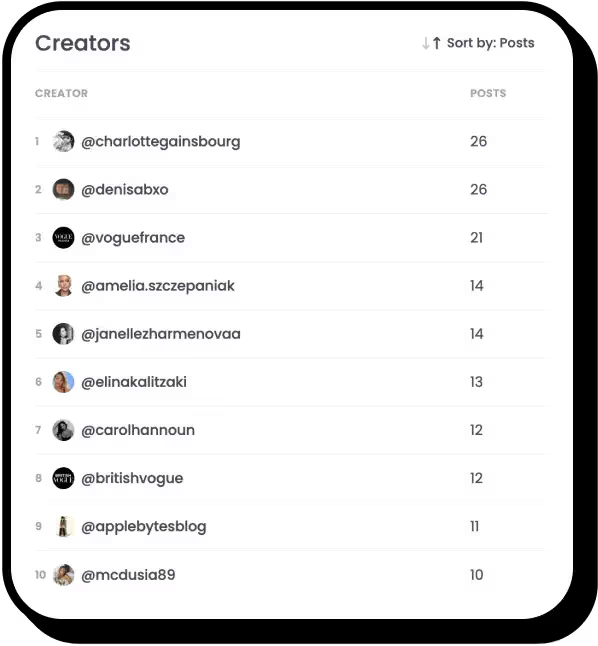
1. Who in your category is already working with creators?
Your audience does not see your campaign in isolation. Social platforms are now a research channel: 62.8% of Instagram users and 56.2% of TikTok users say they use the platform to research brands and products [3]. Knowing which competitors already show up there, and with which creators, tells you what your content will be compared against.
2. Which platforms carry the conversation?
3. Which markets respond?
The same campaign can perform very differently from one country to the next. Comparing markets before you brief helps you decide where to start, where to scale and where a local creator mix is needed.
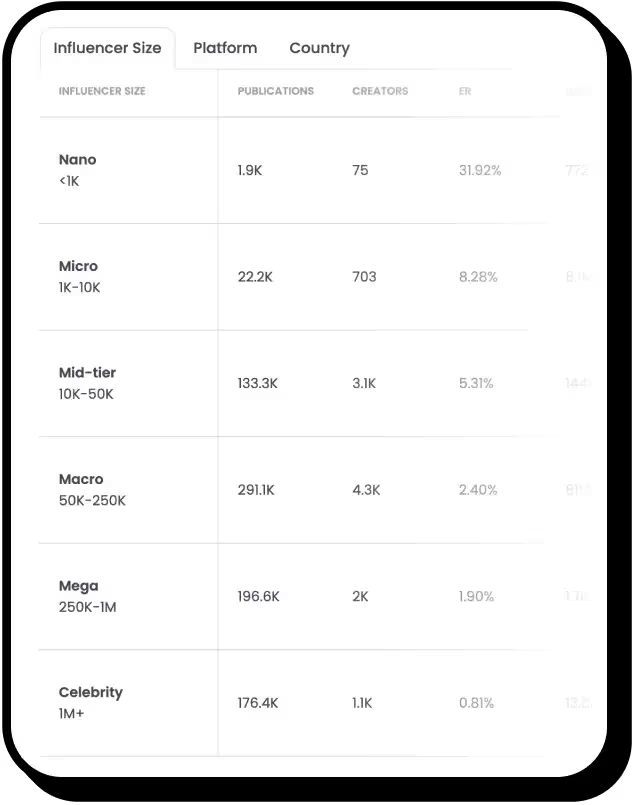
4. Which creator size delivers?
Brands are shifting toward smaller creators. Around 51% of respondents plan to expand work with nano creators and 53% with micro creators, while intent for macro creators is split evenly between growth and cuts [1]. Whether that trend fits your category is something you can check before you commit budget.
5. How does the audience react?
Engagement shows volume, not tone. In saturated categories, attention is harder to win: Beauty brands recorded the lowest engagement across platforms in 2026 [4]. Sentiment shows whether the conversation around a topic or competitor is positive, neutral or negative.
Why generic benchmarks are not enough
Industry benchmarks disagree with each other. Quid puts the median Instagram engagement rate at 0.30% [4], while Socialinsider reports 0.48% [5]. Methods, samples and definitions differ. The benchmark that matters for your campaign comes from your own category, markets and platforms.
In Practice Reading Your Market with Social Insights
At indaHash, these questions are answered through Social Insights, using the Market view scope. It analyzes public publications that are not connected to your workspace, so you see the market, not your own campaigns.
A typical setup takes a few minutes:
- Choose the scope. Select Market view for competitor and category research.
- Pick platforms, countries and a time range. For example Instagram and TikTok, Poland and Germany, the last 90 days.
- Add hashtags and mentions. Track a category hashtag, a competitor’s handle, or both.
- Decide how they combine. A generic hashtag like #skincare returns the whole category. Add a brand mention such as @competitor and choose Both sections: you will only see posts that use the hashtag and tag the brand.
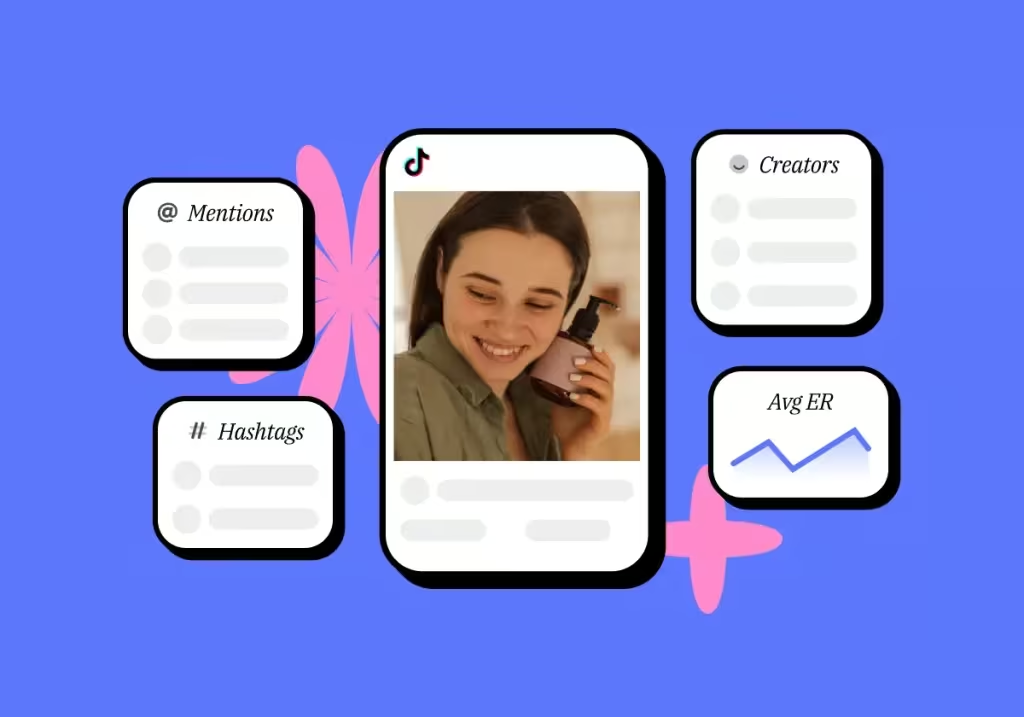
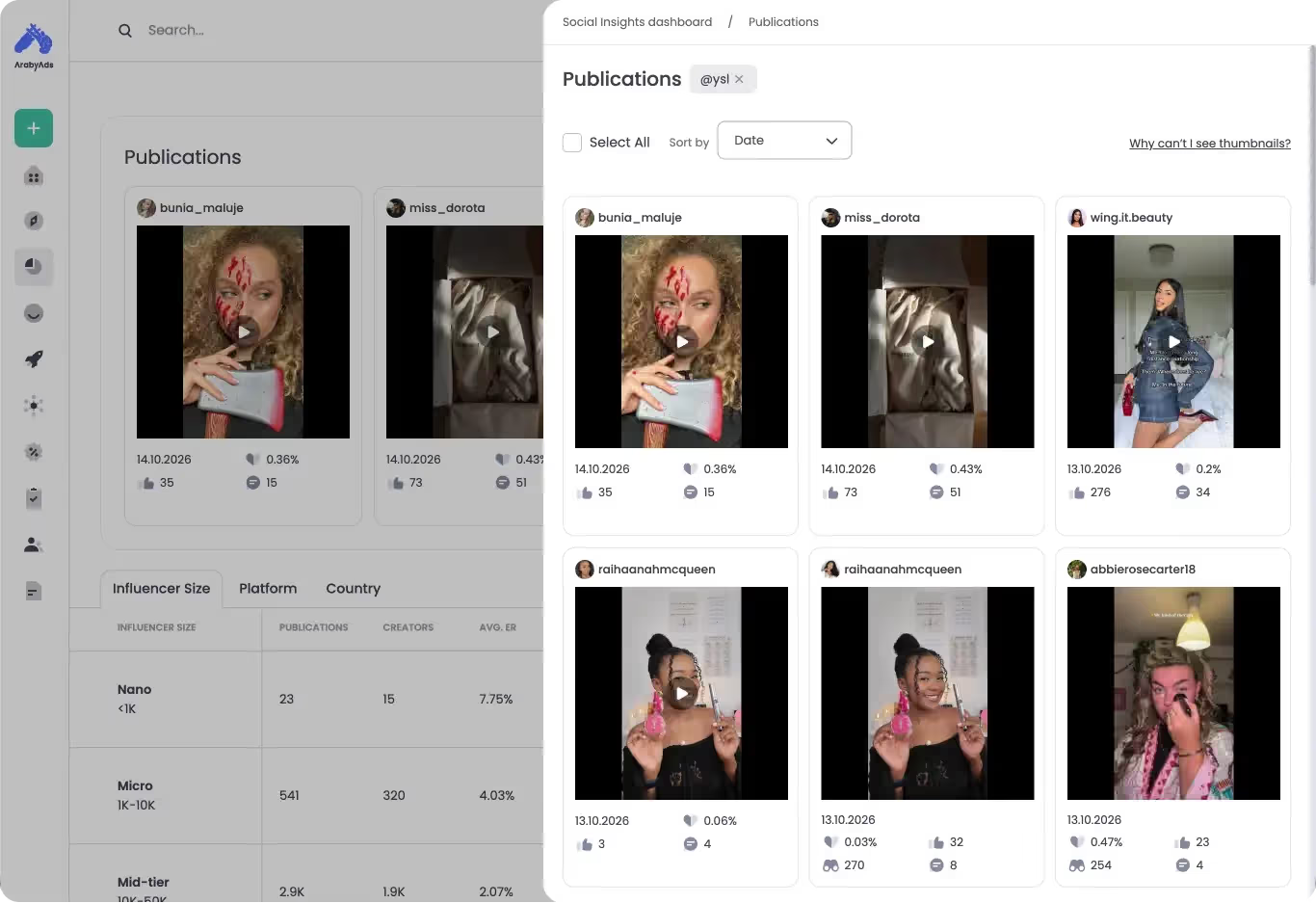
- Read the dashboard. Summary shows publications, creators, average ER and sentiment, with change versus the previous period. The Influencer Size, Platform and Country tabs answer questions 2 to 4 directly.
Each configuration is saved as its own dashboard. Name it after the question it answers, for example “Skincare: competitors PL/DE”, and duplicate it to compare another competitor or market without starting over.
From Market Signals to a Better Brief
Research only pays off when it changes the brief. Each finding maps to a decision:
| What you see in the market | What it changes in the brief |
|---|---|
| Competitors are active on one platform, absent on another | Platform mix: go where you can stand out, or where your category is proven |
| One country shows higher ER or more positive sentiment | Market priority and rollout order |
| Micro creators outperform macro in your category | Creator tiers and budget split |
| Category ER differs from generic benchmarks | A realistic ER target for your KPIs |
| Negative sentiment around a topic or competitor | Content guidelines: what to avoid, what to address |
The result is a brief built on evidence. When a stakeholder asks why you chose TikTok micro creators in Germany, you can show the dashboard, not just your experience. That brief then feeds directly into AI-powered creator search, where discovery starts from your campaign intent.
Then Measure Your Own Campaigns the Same Way
Once the campaign is live, switch the scope to My workspace. Social Insights then analyzes only publications from campaigns in your workspace, with the same metrics: ER, likes, comments, sentiment, creator size, platform and country.
Because both views use the same metrics, you can put your market dashboard next to your campaign dashboard and see where you are ahead and where the market still sets the pace.
That closes the loop many teams are missing: research before the brief, measurement after launch, and a clear comparison between the two.
Key Takeaway
Planning an influencer campaign should not start with guesswork, generic benchmarks, or insights that only appear once the campaign is already live.
Whether you want to research competitors, compare markets, or understand which creators and platforms drive results in your category, Social Insights shows you the market before you write the brief. By switching between Market view and My workspace, brands can measure their own campaigns with the same metrics they used to research the market. This leads to clearer briefs, realistic KPIs, and creator choices that are easier to defend.
The result is less guesswork, more confident planning, and a stronger link between market insights and campaign performance.
Want to see your market before your next brief?
Book a demo and we will show you Social Insights within your own category.

[1] Influencer Marketing Hub, Influencer Marketing Benchmark Report 2026, survey of 600+ respondents, 2026.
[2] Linqia, 2026 State of Influencer Marketing Report, survey of 200+ enterprise marketers, published September 2025.
[3] DataReportal (Kepios, We Are Social, Meltwater), Digital 2026: 2 in 3 people on Earth now use social media, published October 2025; platform research data from GWI.
[4] Quid (formerly Rival IQ), 2026 Social Media Industry Benchmark Report, March 2026; median engagement per post, 150 companies per industry.
[5] Socialinsider, 2026 Social Media Benchmarks, January 2026; 70M posts published January 2024 to December 2025.